
Gastbeitrag von Jule Wilhelm (fundraising fempire)
This year I worked already with more than 20 founders on their fundraising process and one pattern kept repeating itself: Founders come to me saying: „We want to raise now.“ But very often, after the first conversations, it becomes clear that the real challenge is not the fundraising itself. It’s that the company is not fully ready yet to fundraise.
Sometimes the traction is still too early.
Sometimes the narrative is unclear.
Sometimes the milestones don’t support the valuation expectations.
And often, there is simply no strategic roadmap behind the round yet.
Now you have two options: Either you decide to go into fundraising anyway. Most likely, the process will take much longer than expected, conversations won’t really convert into momentum, and fundraising becomes depressing without clear direction and success.
Or you focus first on strengthening the fundamentals of your business by improving traction, getting closer to customers and preparing strategically for the right fundraising moment.
That’s why over the last months I started structuring a clearer framework around fundraising readiness and how I work with founders before they actively launch their round.
Step 1: Assessing investability and readiness
Before we think about a pitch deck or researching investors, I first want to understand if this is actually the right moment to raise. And that means we have to look at certain data points that help us answer this question.
Therefore in a first step, I analyze with the founders:
- Traction & KPIs
- Upcoming milestones
- Sales Pipeline
- Market size
- Market attractiveness
- Team and founder setup
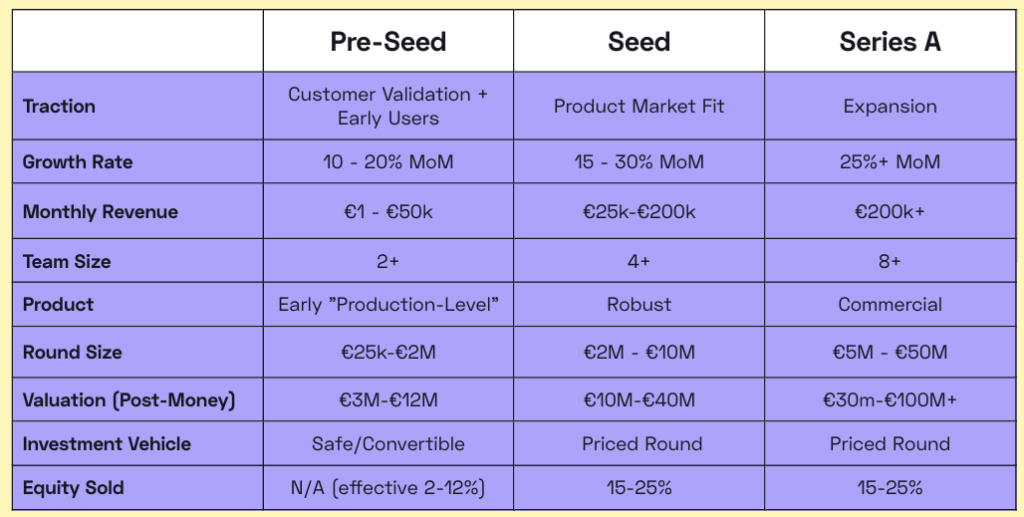
This is not only a perfect pre-work for your pitch deck, this gives also a good indication on where you stand right now and what potentially still needs to happen to be relevant for investors.
A good benchmark is the following overview:
Step 2: Building the fundraising roadmap
Once we have a better overview of the KPIs we need to hit to become fundraising ready, we can build a clear and strategic fundraising roadmap.
In this step 2, I usually define the following:
- When to raise
- How much to raise
- Clear milestone planning on which milestones we need to hit before the round and which ones we want to hit with the new money
- Runway planning
- Valuation expectations
- From whom we want to raise
For me, the most important part is not only planning the immediate next round, but also thinking about the future. What will this additional capital help you unlock long term?
Step 3: The investor story
Only at this stage do we start refining the narrative we want to tell investors. Why? Because your pitch deck should not tell a general story about your company, but a very specific story about this fundraising round.
Usually, this is also the moment where I rip your deck apart and give you the most hands-on and detailed feedback possible 😉
The deck will answer:
→ why now
→ why this market
→ why this team
→ and why investors should believe this company can become venture-scale
Thanks to all the pre-work, this part suddenly becomes much clearer.
Step 4: Investor targeting & inbound strategy
Now comes the moment where we dive deeper into the investor profile and define what the perfect investor for your round actually looks like.
This is the moment to define:
→ who the right investors actually are
→ where to find them
→ how to segment them
→ how to build investor relationships early
→ and how to create inbound interest & momentum around the round
Which means that in the end, you not only have a structured plan for your fundraising process, but also a very clear understanding of what needs to happen over the next months to become truly fundraising ready.
Fundraising Readiness Summer Camp for 4 selected startups ☀️
A hands-on program where we work together on:
→ assessing fundraising readiness
→ building the roadmap behind the round
→ refining the investor story
→ and preparing strategically for fundraising over the next 6–12 months
And the best part? I will work closely with each startup in a 1:1 setup throughout the program.
Since you are reading this newsletter, you get access to this offer 48 hours before the public launch 👀
Only 4 startups can join.
This is what Tamir from Obortech said about my work:
Working with Jule brought clarity and structure to our fundraising process. From refining our approach to identifying the right investors and setting up our round, her guidance was practical and highly effective. Every session moved us forward with clear next steps.
If this sounds relevant for your startup, just send me an email and I will send you the details.
Ready to take your fundraising game to the next level this summer?
Start structured fundraising today!
Jule
💜
Credits: Jule Wilhelm / Beitragsbild: Alperiya Nazina
